
What was happening at the gate
In 2020 every school in Malaysia had the same morning: temperature screening at the entrance before anyone could come in.
At SJKC Cheng Siu 1 that meant staff standing at the gate with handheld forehead thermometers, taking a reading from each child, one at a time, in the morning heat. Every reading is a few seconds. Several hundred children is a queue that stretches into the road, and it is teachers doing it — people whose morning was already committed to something else.
It was also a rule enforced by a tired human at seven in the morning, which is the least reliable configuration of any rule.
An alumnus of the school decided to fund a fix. We specified, supplied and installed it.
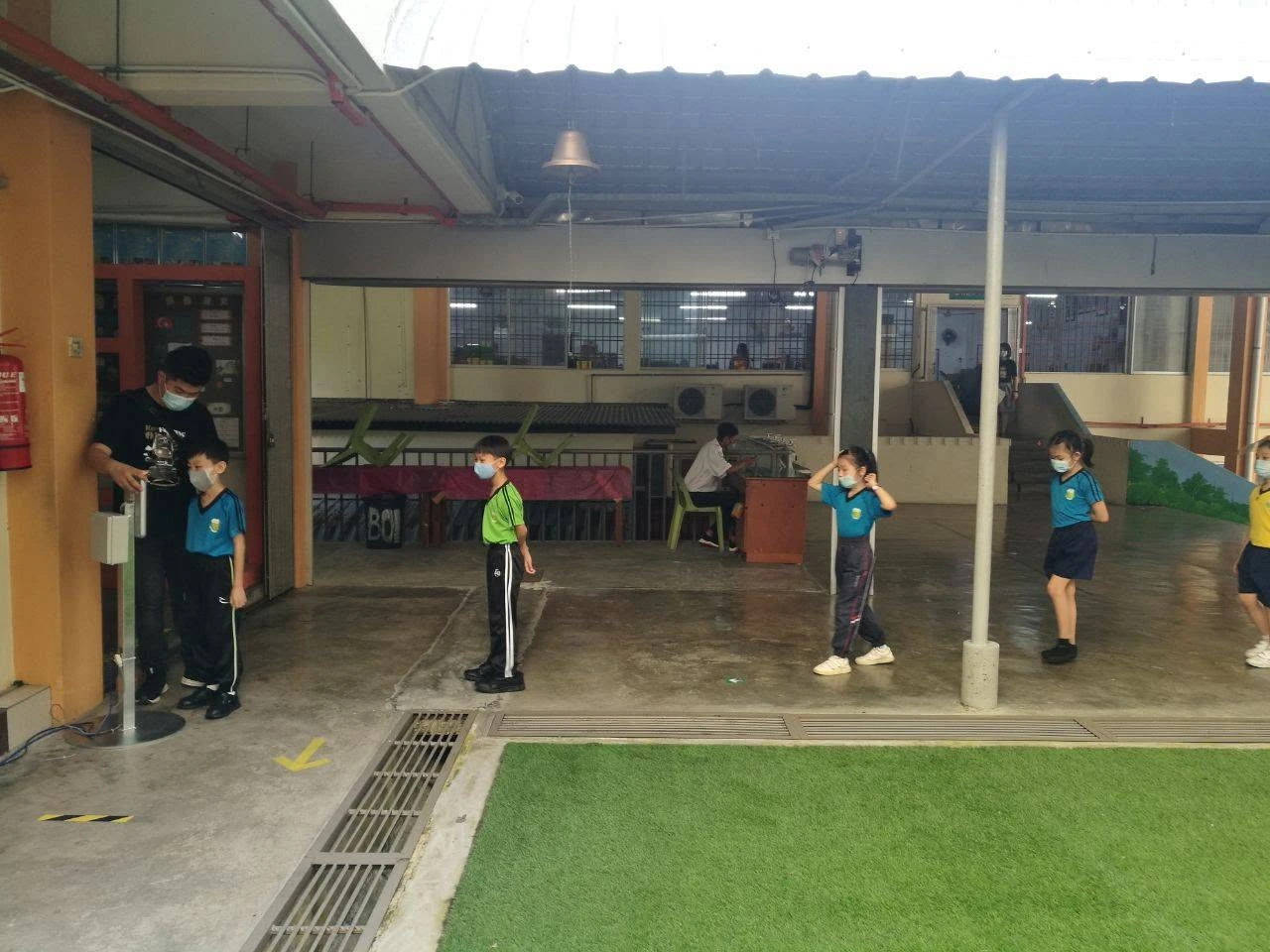
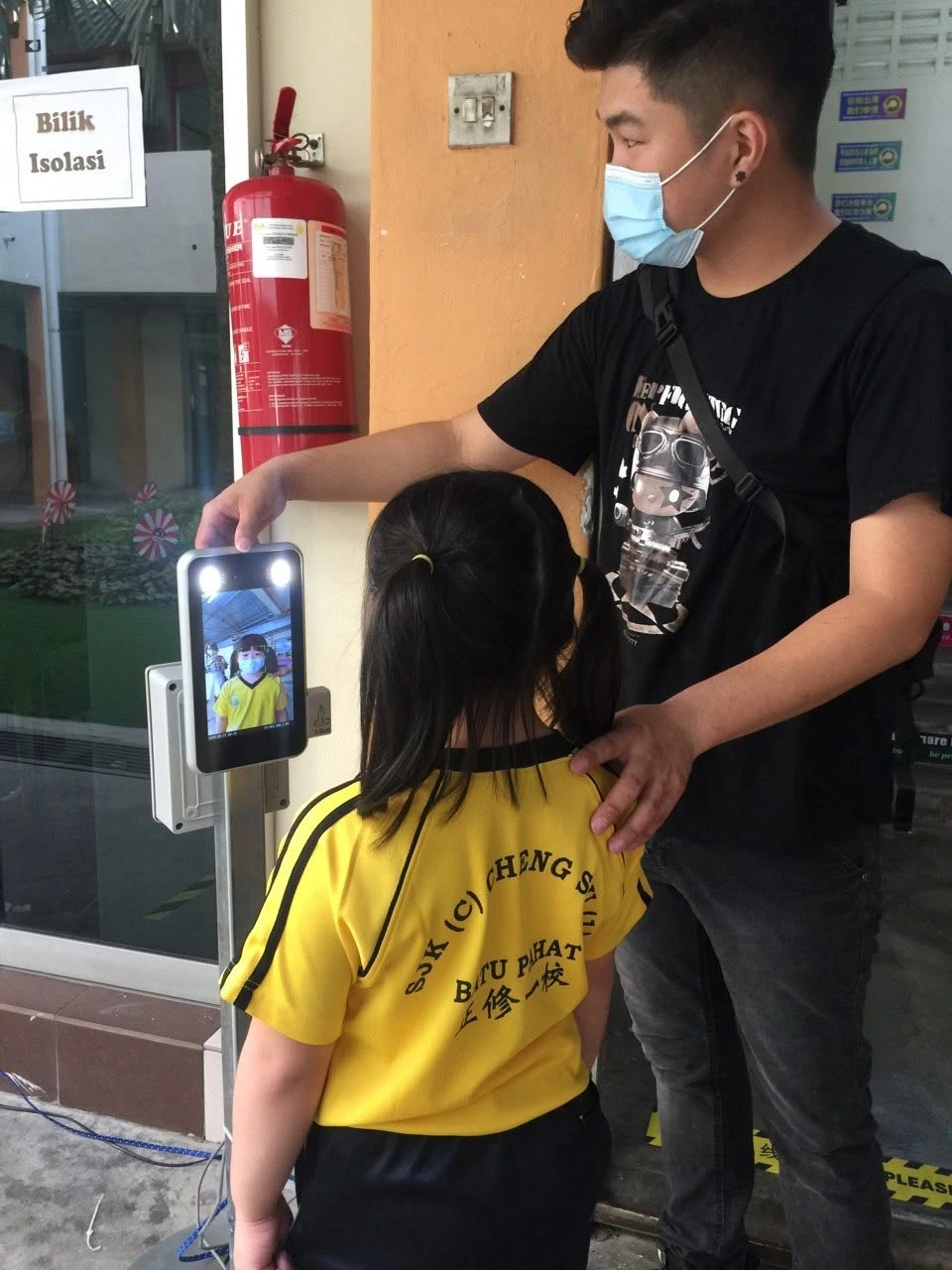
What the device does
The terminal sits at the entrance and combines three ordinary technologies that are only interesting together:
- Facial recognition against an enrolled set, so the person is identified without touching anything or presenting a card.
- Infrared temperature measurement taken at the same moment, at a fixed distance the device controls, which is a large part of why it is more consistent than a handheld reading taken at whatever distance a tired arm chooses.
- A pass or hold decision, indicated immediately and audibly, so a child knows to walk on or wait without an adult having to say it.
One person per screening interaction becomes zero. The queue becomes a walking pace. The record of who entered and when is a by-product rather than a second job, which matters on the day someone has to be traced.
What hardware deployment teaches
Every lesson from this install was physical, and none of them appears in a datasheet.
- Mounting height is a design decision. A terminal at adult height fails for a seven-year-old and works for a twelve-year-old. Getting a device to serve a whole primary school means choosing the height for the shortest user and accepting a slight stoop from the tallest — the opposite of the default installation.
- Light defeats sensors. Malaysian morning sun at a gate is brutal and it moves across the year. Facing a terminal into direct sun produces unreliable recognition at exactly the hour it is needed. Orientation and a shade are not accessories.
- Power and network reach are the real constraint. The best position for a screening terminal is the position that has power near it. Anything else means conduit, a contractor and a school holiday.
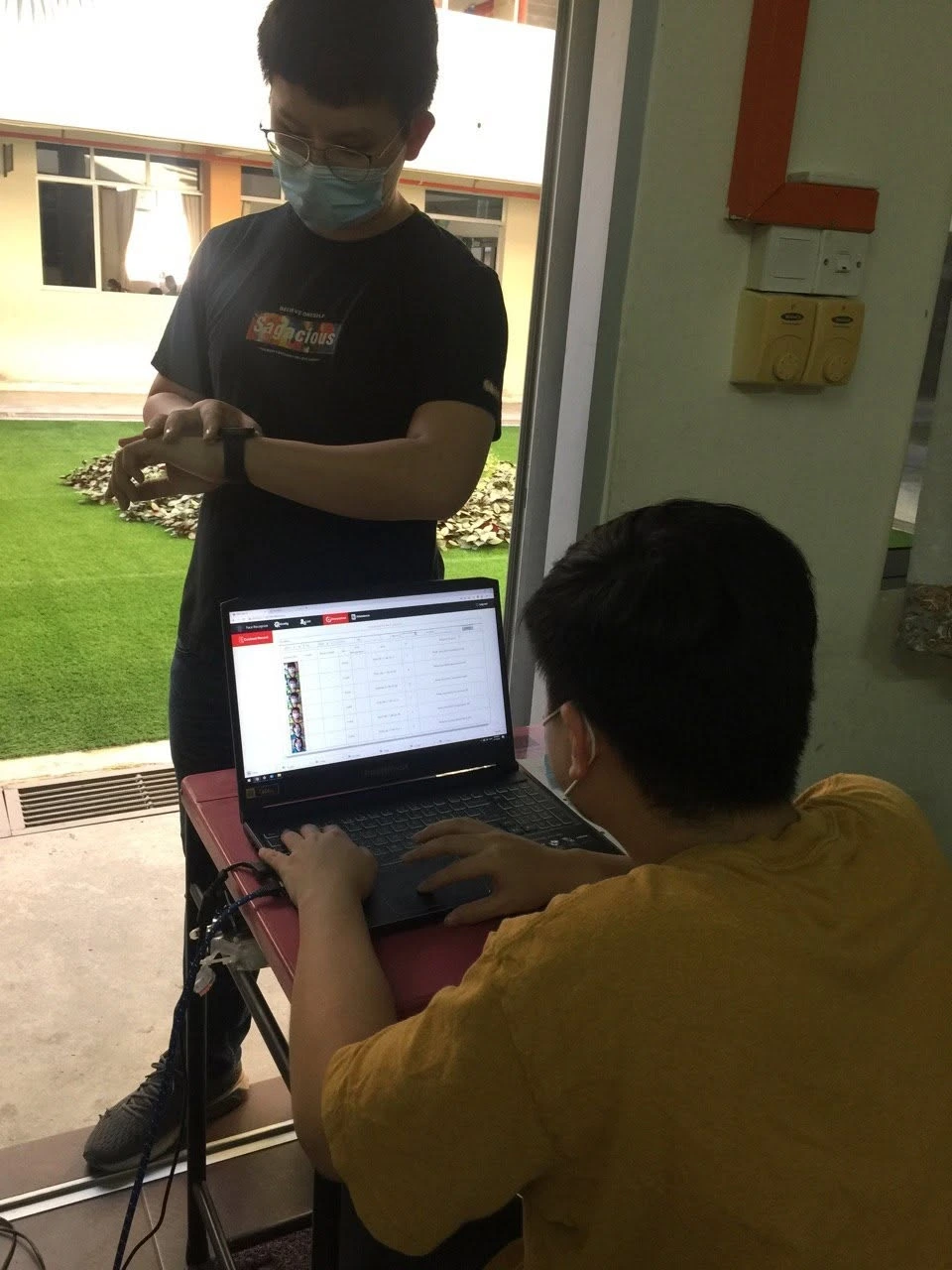
- Enrolment is the whole project. Getting several hundred children enrolled — with consent, correctly labelled, without disrupting a school day — is more work than the physical installation, and it is where the plan should start rather than end.
- Everyone was masked, including the faces being enrolled. That was the year. It is worth saying plainly because it sets the accuracy expectation: a face recognised from the upper half alone is a harder problem than the datasheet's figure was measured on, and the honest answer at a school gate is that a small number of children need a second attempt every morning. Plan the queue around that rather than around the specification.
- Handover has to survive the person you trained. Schools rotate staff. A device that only one teacher understands stops being used within a year. Written instructions, in the language the office actually works in, taped where the device is.
Biometrics in a school, and the question to ask first
A face template is personal data, and in a school the subjects are children. That deserves being said out loud rather than left implied.
The law has since caught up with the point. Since 1 April 2025 the Act defines biometric data — any personal data from technical processing of a person's physical, physiological or behavioural characteristics — and puts it inside sensitive personal data. So a face template is not something you handle carefully as a matter of good practice; it is a category the Act singles out, and section 40 bars processing it without explicit consent or one of a short list of statutory conditions.
The first question is not which device to buy. It is: what is stored, where, for how long, and who can reach it? Everything else follows from the answer. In practice that means the enrolment set is held on the device or on a school-controlled machine rather than a vendor's cloud, the retention period is decided at the start and is not "indefinitely", parents are informed and consent is recorded, and access to the store is limited to named people.
Since 2020 the ground has moved twice. The Personal Data Protection (Amendment) Act 2024 brought a mandatory DPO, a 72-hour breach notification clock and direct security obligations on processors. Then, on 30 April 2026, the Commissioner issued guidelines on impact assessments and on automated decision-making, and a facial recognition deployment lands squarely in both. Systematic monitoring — the guideline names facial recognition specifically — points at a Data Protection Impact Assessment. And matching a face against an enrolled set is automated decision-making, which requires a DPIA on its own, at any scale. Children's data is a named risk factor in the same list.
Two more that a school in particular should check. The privacy notice has to say that automated decisions are being made, what kind, and with what consequences. And education is one of the sectors that must hold a Certificate of Registration from the Commissioner — an obligation that predates all of the above by a decade and is the one most often discovered late. Whether a particular institution falls in the class is a lawyer's answer, not ours; the point is to ask early.
Anyone specifying a biometric system in Malaysia today should treat all of that as part of the specification rather than as paperwork to follow.
Our position is straightforward. Biometric attendance is worth it where it removes a genuine bottleneck — a gate, a shift change, a site entrance with hundreds of people. Where nobody is queueing, it adds a category of sensitive data to protect in exchange for saving a card swipe, and we will say so.
Where these end up afterwards
The screening requirement passed. The devices did not stop being useful, and the schools and companies that thought about the second life got more out of them than the ones that did not.
The recognition and the record are the durable parts. What was a health checkpoint becomes ordinary attendance: who arrived, when, contactless, without a register or a card. In a company the same terminal becomes access control and a timesheet feed that nobody has to type.
The general lesson is worth keeping. Hardware bought for an emergency lasts a decade. The purchase decision should include one honest sentence about what it does when the emergency ends — and if there is no answer to that sentence, rent it instead.
What we do in this category
Not everything is a web application. Where the outcome needs a physical layer, we specify, supply, install and hand over:
- Facial recognition and access control terminals — gates, doors, turnstiles, site entrances.
- Attendance capture wired into payroll, including into Odoo rather than into a spreadsheet.
- Industrial weighing and instrument integration, where a scale's reading has to become an auditable record.
- Screens on walls that show something true — see the telemetry wall.
The common thread is that the device is never the deliverable. The record it produces, and what that record is wired into, is.
Questions
It can, and it does not by default. Since 1 April 2025 a face template is not merely personal data: biometric data is sensitive personal data by name in the Act, which means section 40 bars processing it without explicit consent or one of the narrow statutory conditions. On top of that come a stated purpose, a retention period, access control over the template store, and — for minors — consent from a parent or guardian. Two further obligations arrived on 30 April 2026: facial recognition is systematic monitoring, so it points at a Data Protection Impact Assessment carried out before deployment, and matching a face against an enrolled set is automated decision-making, which triggers a DPIA on its own regardless of how many people are enrolled. The device is the easy part; the assessment, the notice, the consent record and the deletion practice are the work. See our PDPA guide.
For throughput at a gate, yes — it is contactless, it needs no distributed token and nothing gets lost, swapped or lent to a friend. For a small office where everyone already carries an access card, adding a biometric usually buys convenience at the cost of a new category of personal data to protect. The right answer depends on volume and on how much friction the current method actually causes; if nobody is queueing, do not solve a queue.
Both, when the problem needs both. Software-only firms will make a hardware problem into a dashboard. Our test is whether the customer's outcome requires the physical layer — a gate, a scale, a sensor, a screen on a wall — and if it does, we specify, supply, install and hand it over rather than sending someone else's quotation.