
The split, stated plainly
Case studies usually blur who did what. This one should not, because the arrangement is the interesting part.
| Hyunix | ZYNTEIRO |
|---|---|
| Capture — panoramic photography on site | The tour platform and viewer |
| Branding and creative direction | Hosting, delivery and uptime |
| Marketing and sales | Processing pipeline and storage |
| The client relationship | Integration and embeds |
Every tour ships under the Hyunix name. That is deliberate and it is the correct outcome: the customer bought a Hyunix tour, and the technology's job is to be invisible.
Why the halves need different companies
Shooting a good 360° tour is a craft. Positioning a tripod so the stitch line falls somewhere forgiving, bracketing exposures for a temple interior with sunlight coming through a doorway, keeping people out of the frame in a working showroom, and knowing which six spots in a memorial park actually tell the story — none of that is engineering, and no amount of engineering substitutes for it.
Running the delivery layer is the opposite kind of work. It is storage growth, transcoding, cache behaviour, mobile bandwidth, the tour that stopped loading on one browser after an update, the domain that expires on a Sunday. It is unglamorous, permanent, and it is exactly what a photography business should not be spending its evenings on.
A single company doing both does one of them badly. Usually the platform, because the platform is not what the client is paying for and is therefore always the thing that gets deferred.
What "the platform" actually is
Four pieces, none of them exotic:
- An ingestion and processing path. Panoramas arrive large. They get tiled into multiple resolutions so a phone fetches only the tiles in view at the resolution it can actually use, and they get a low-resolution preview that appears immediately. The whole perceived speed of a tour is decided here.
- A viewer. Panorama projection, hotspot navigation between scenes, floor plans where a floor plan exists, information hotspots, and a share link that opens on the right scene at the right heading.
- Delivery. Each client tour on its own subdomain, on a CDN, with sensible immutable caching. Tiles never change once published, so they should be cached forever.
- Embedding. A tour that only lives at its own URL is worth a fraction of one that drops into the client's own website, a property listing or a Facebook post.
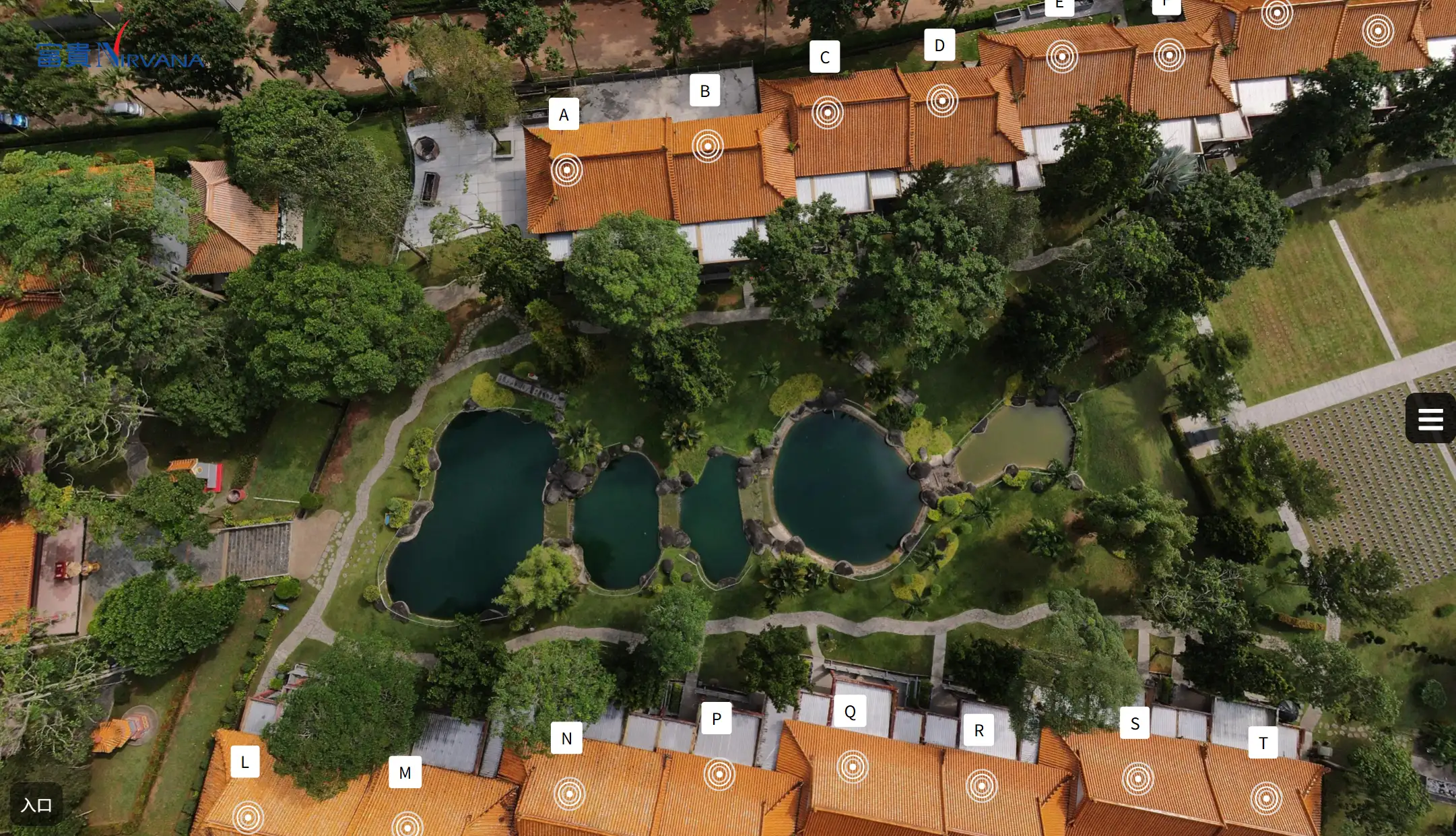
What the platform deliberately does not have is a general-purpose CMS. Hyunix publishes tours; they do not want a content management system, and building one would have added a maintenance surface to solve a problem nobody had.
What people actually tour
The subject mix in Johor turned out to be different from what a Western case study would predict, and it changed the engineering priorities.
- Temples and religious sites — Hsing Ma Temple, Dong Chan Temple. Large interiors, difficult mixed lighting, and an audience that includes people who cannot travel to visit. This is the category where a virtual tour is doing something genuinely useful rather than merely convenient.
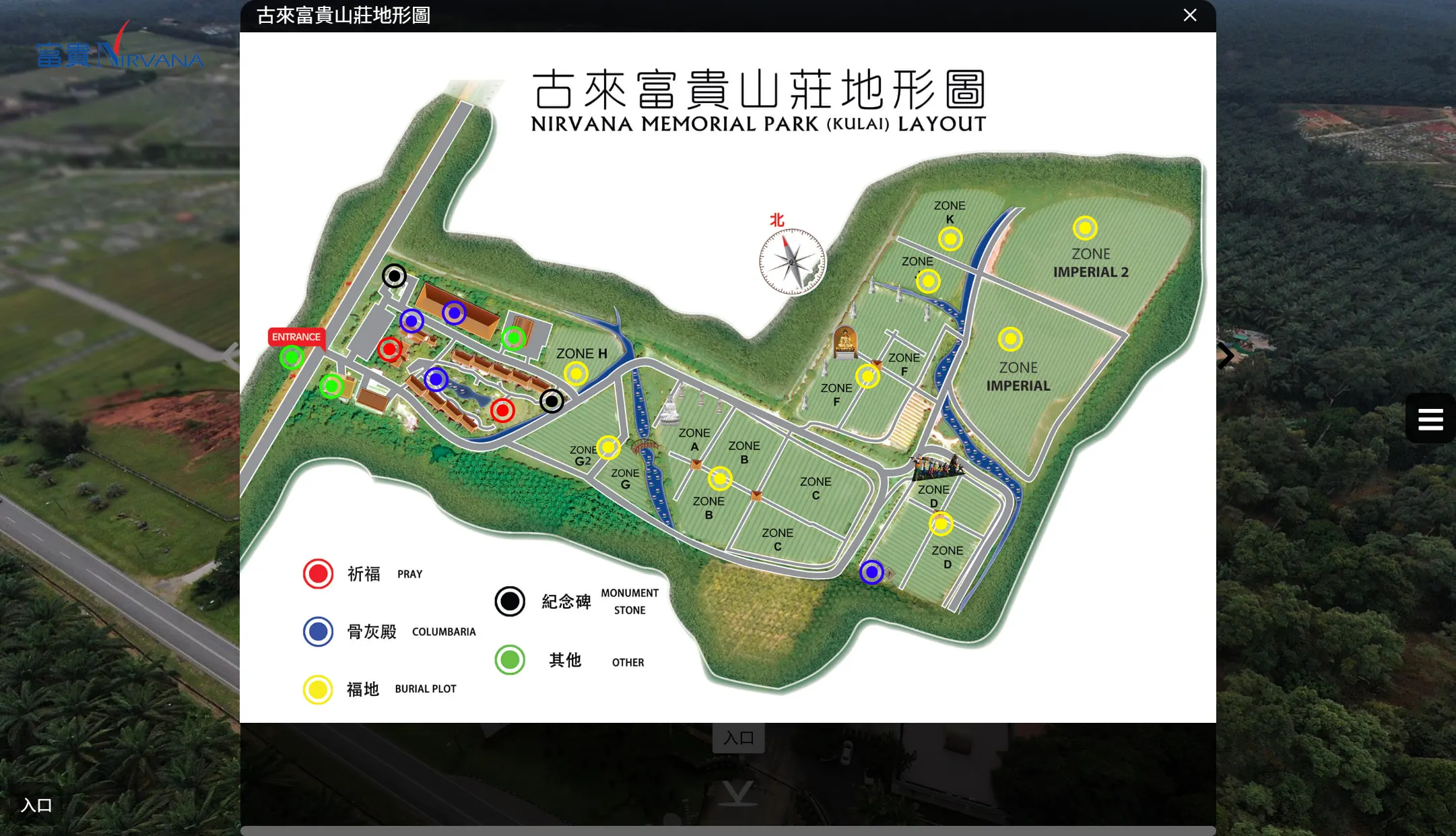
- Memorial parks — Nirvana Memorial Park Kulai. A considered, sensitive purchase where site visits are emotionally expensive; being able to look first, privately, matters.
- Property and development — Senai Garden, KCC River City. The obvious case, and the one with the shortest content lifespan.
- Retail and showrooms — Ginmit home living. Effectively a browsable catalogue where the products sit in context.
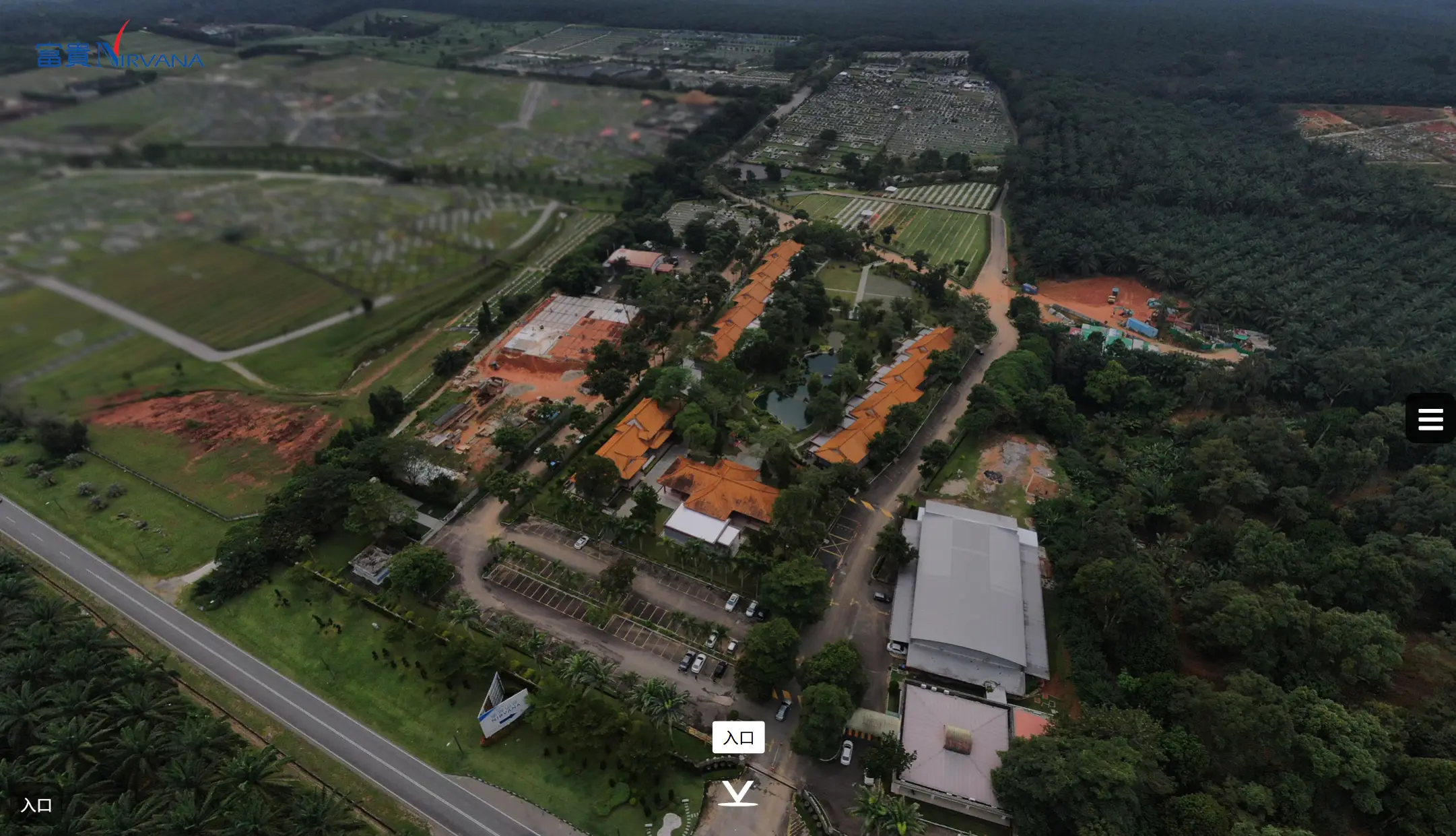
Two consequences. First, most of these are viewed on a phone on mobile data, so the tile budget matters more than the panorama resolution ceiling. Second, several are viewed by an older audience, so navigation has to survive someone who will not discover a gesture — visible hotspots, an obvious floor plan, no hidden affordances.
What we learned about shipping panoramas
- The first tile is the whole first impression. A low-resolution preview that paints instantly, then sharpens, beats a sharp tour that arrives two seconds later. Every time.
- Storage is the cost that surprises people. Multi-resolution tiling multiplies a shoot several times over, and nothing is ever deleted because a tour from three years ago is still linked from somewhere. Plan the storage curve before the first client, not after the tenth.
- Share links must carry the view. A link that opens at the default heading loses the reason it was shared. Scene and heading belong in the URL.
- Attribution belongs in the platform, not in the process. Hyunix branding is applied by the system, so it can never be forgotten on a rushed delivery.
If you want this arrangement
The pattern generalises well beyond tours. A studio, agency or specialist firm has the craft and the customers; the technology underneath is a permanent liability they did not sign up for. We build and operate that layer, under their brand, and stay out of their client relationship.
It works when the split is written down at the start — who owns the customer, whose name is on the artefact, who is called at 11 pm — and it goes wrong when it is left implicit. Ours is written down.
Questions
For the technology, yes. For the photography, no — that is Hyunix's craft and we do not compete with a partner we build for. If you want a tour of your premises in Johor, talk to Hyunix. If you are an agency or a studio that shoots tours and needs the platform underneath to be yours rather than a subscription, that is the conversation to have with us.
A hosted service is faster to start and correct for many businesses. It becomes wrong at the point where the tours are the product: you are renting the delivery layer for content you paid to create, your brand sits inside someone else's frame, per-tour pricing scales with your success rather than your costs, and you cannot embed a tour inside your own application. Owning the platform trades a subscription for an asset. Whether that trade is right depends entirely on volume.
No, and designing as though they do is the usual mistake. Effectively all viewing is a phone or a laptop. Headset support is worth having and worth zero effort beyond what the browser gives you; the engineering effort belongs on the phone, on a Malaysian mobile connection, on the first panorama.